How to Acclimate New Houseplants : Houseplant Care Guides
Why pristine greenhouse tropicals throw tantrums in your living room, the biological reality of stomatal sluggishness, and the step-by-step 30-day intake protocol that saves every new plant.
The 14-Day Post-Nursery Meltdown
We have all experienced this exact frustration: you spot a flawless tropical plant at a boutique plant nursery. Its foliage is glossy, thick, and vibrant. You bring it home carefully, set it in your living room, and admire it like living art.
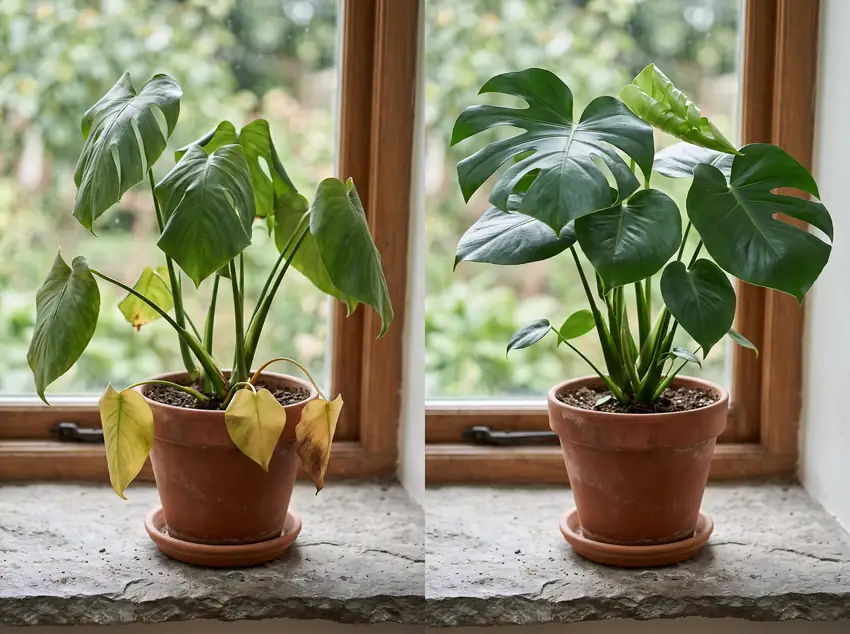
Ten days later, the collapse begins. Lower leaves turn pale yellow and drop in clusters. Leaf edges curl inward, new shoots turn brown, and the entire plant wilts despite sitting in moist soil. Many growers assume they have done something wrong or frantically pour on extra water and fertilizer, accelerating root rot.
This sudden decline stems from acute environmental shock rather than poor care or disease. Commercial nurseries are warm, climate-controlled greenhouses with 85% relative humidity, automated misting, and continuous airflow. When that plant enters a home with 35% humidity, winter heating drafts, and lower light levels, its cellular physiology is unprepared. Understanding what happens inside the leaf tissue during this move allows you to guide any new plant through a smooth transition.
The Science: Stomatal Sluggishness, Cuticle Thickness, and VPD Spikes
1. Stomatal Sluggishness: Guard Cells That Forget How to Close
The primary driver of post-nursery wilting is a physiological condition known as stomatal sluggishness (Aliniaeifard & van Meeteren, 2013; Santrucek et al., 2007). In commercial production greenhouses, plants develop under continuous relative humidity above 80% to 90%.
Because the greenhouse air is nearly saturated with moisture, the plant experiences minimal evaporative demand. Its microscopic stomatal pores remain wide open for weeks at a time. The guard cells lose sensitivity to abscisic acid (ABA), the chemical messenger that prompts stomata to close during water deficit. When moved into a dry living room, the stomata cannot close promptly. Water evaporates uncontrollably from the leaf interior faster than root hairs can replenish it, causing limp foliage even in damp soil.
2. Thin Cuticular Wax and Vapor Pressure Deficit (VPD) Shock
Under continuous high greenhouse humidity, tropical leaves synthesize an ultra-thin protective wax layer (cuticle). When moved into a heated room, the Vapor Pressure Deficit (VPD) rises sharply (Conover & Poole, 1984).
The dry indoor atmosphere pulls moisture directly through this thin cuticle. Until the plant produces new leaves equipped with thicker waxy barriers calibrated to home humidity levels, older nursery-grown foliage remains susceptible to crispy margins and chlorosis.
3. Light Acclimation: Photo-Oxidation vs. Starvation
Commercial growers rely on high-intensity lighting systems to maximize production speed. These leaves feature chloroplast structures organized for high photon density (Boardman, 1977). Placing a fresh arrival directly onto a sun-drenched windowsill triggers photo-oxidation, causing white or bleached burn patches.
Conversely, setting it in a dark interior corner drops it below its light compensation threshold, causing sudden leaf shedding. Acclimating new plants requires a gradual step-down approach: moderate, diffuse light for the first two weeks before placing the plant in its permanent location.
The 30-Day New Plant Intake & Acclimation Protocol
Follow this systematic four-week protocol to transition any nursery plant without foliage loss:
Week 1: Quarantine, Hydration, and Microclimate Buffer
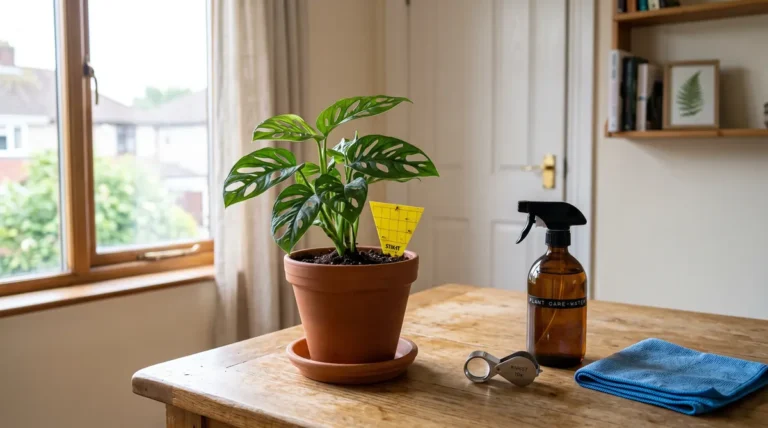
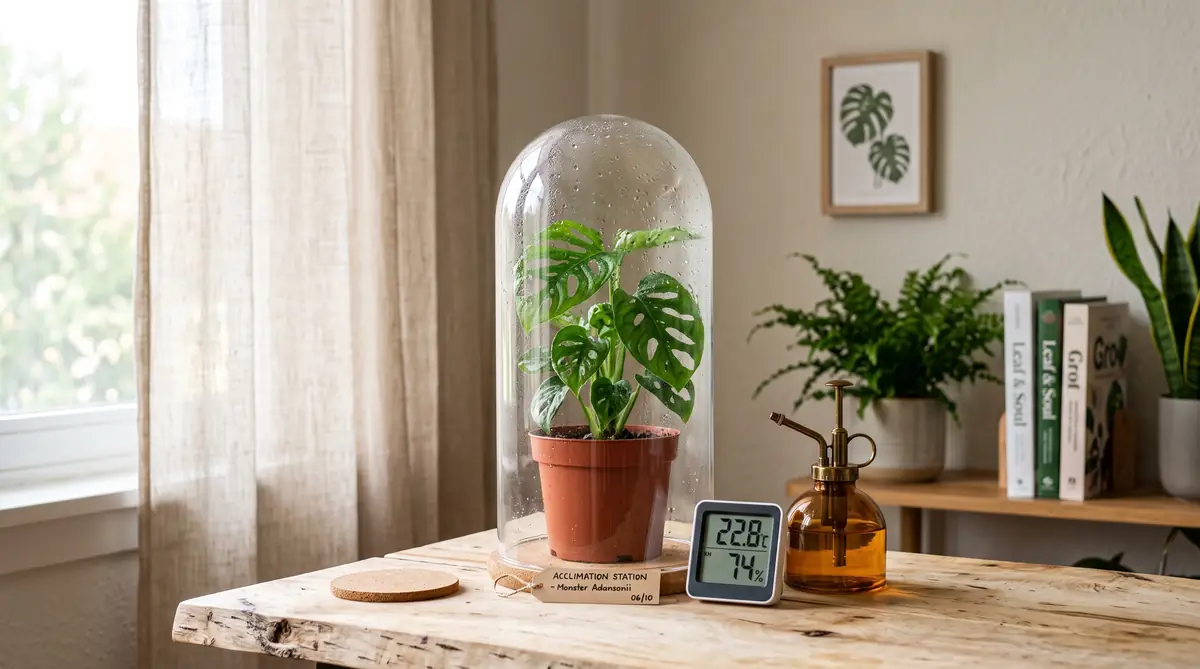
Isolate your new plant in a bright room away from your primary collection. As outlined in our guide on Quarantine Protocols & Preventative IPM, this step prevents pest migration. If the plant shows signs of edge-curling or droop, place a clear plastic cover or humidity cloche loosely over the foliage for four to five days to buffer water loss.
Week 2: Gentle Light Exposure and Root Thermal Stability
Delay repotting during this initial transition period. Disturbing the root ball while guard cells are adjusting doubles stress on the root system (Paul & Cockshull, 1990). Keep the root system in its original nursery pot, protect it from cold drafts, and provide gentle morning light or 100 PPFD of diffused LED light.
Week 3: Step-Down Humidity and Moisture Calibration
Remove any temporary humidity covers for several hours each day, encouraging guard cells to resume natural opening and closing cycles in ambient home air. Water only when the top third of the soil feels dry to the touch.
Week 4: Permanent Placement and First Feeding
By day 30, the plant has adjusted its stomatal responses and initiated fresh shoot growth. Move the plant to its permanent display position and introduce diluted organic plant nutrition to support vegetative development.
New Houseplant Acclimation: Dos vs. Don’ts
| Action Category | What to Do (Best Practice) | What to Avoid (Common Mistake) |
|---|---|---|
| Repotting Timing | Wait 3 to 4 weeks before disturbing the root ball | Repotting immediately on day 1 into a large ceramic pot |
| Initial Lighting | Provide moderate, diffuse, bright indirect light | Placing directly on harsh south windowsills or in dark corners |
| Fertilization | Withhold fertilizer until fresh new growth emerges | Feeding heavy synthetic fertilizer to a stressed plant |
| Pest Intake | Quarantine for 14 days and inspect leaf undersides | Placing new purchases directly next to prized collections |
Troubleshooting New Plant Adjustment Symptoms
• Lowest 2 Leaves Turned Yellow and Dropped Within 7 Days
This represents normal resource reallocation. The plant sheds older, lower leaves that cost more energy to maintain than they produce under lower home light. As long as top growth remains firm and green, continue the routine.
• Leaves Are Limp Even Though Soil Is Wet
This is the hallmark symptom of stomatal sluggishness. The foliage is losing moisture faster than root hairs can replace it. Increase ambient humidity immediately with a cloche or humidifier, and avoid adding more water to the wet soil.
• Brown Crispy Edges on New Growth Tips
Sharp drops in relative humidity cause delicate unfurling leaves to stick and tear during expansion. Grouping plants together or running a small cool-mist humidifier prevents margin browning.