How Far Away to Quarantine Tropical Plants: Neem Protocol
Why skipping quarantine puts your entire houseplant collection at risk, how pest incubation cycles work, and the exact 5-step intake routine every new plant should undergo.
The $12 Plant That Cost Me Half My Collection
We have all experienced the euphoria of finding a dream tropical plant on a nursery clearance rack for a bargain price. Years ago, I brought home a gorgeous, bushy Philodendron from a big-box garden center. Thrilled with my find, I immediately placed it right on my main living room plant shelf, surrounded by thirty of my rarest tropicals.
What I did not realize was that the plant carried invisible thrips eggs inserted directly inside the leaf tissue. Within three weeks, microscopic thrips larvae hatched, spread across the entire shelf, and infested every Monstera, Anthurium, and Calathea I owned. It took four months of weekly spraying and hundreds of dollars in treatments to recover.
That expensive mistake taught me the golden rule of indoor gardening: every incoming plant is guilty of carrying pests until proven innocent. Setting up a disciplined intake and quarantine protocol is the single most effective habit you can build to keep your indoor jungle thriving.
The Science: Integrated Pest Management and Incubation Windows
1. What is Integrated Pest Management (IPM)?
Commercial greenhouse operations do not rely on random chemical spraying; they use Integrated Pest Management (IPM) (Pedigo & Rice, 2014; Norris et al., 2003). IPM is a layered hierarchy of defense built from the ground up:
- Level 1: Prevention & Exclusion (The Base): Quarantine new arrivals, sanitize tools, and inspect root balls before pests enter your space.
- Level 2: Cultural Controls: Provide proper lighting, airflow, and optimal watering to keep plant immunity high.
- Level 3: Physical & Mechanical Controls: High-pressure foliar washes, manual Q-tip debridement, and yellow sticky monitoring cards.
- Level 4: Biological & Chemical Controls (The Peak): Beneficial predators, suffocating oils, and targeted systemics when scouting reveals an active breach.
2. Why 14 to 30 Days of Isolation is Mandatory
Many growers assume a 48-hour quarantine is enough. Entomological lifecycle studies (Flint, 2012; Al-Jboory, 2000) prove why this fails. Most common indoor pests spend part of their lifecycle invisible to the naked eye:
Thrips eggs remain buried within leaf epidermis for 4 to 8 days before hatching. Mealybug and scale crawlers wander as microscopic specks for 7 to 10 days before producing visible wax. Spider mite eggs take up to a week to emerge in typical indoor room temperatures. A 21 to 30-day quarantine period guarantees that any dormant egg or pupa will complete its lifecycle and reveal itself while still safely contained.
The Intake Inspection Checklist: Where Pests Hide
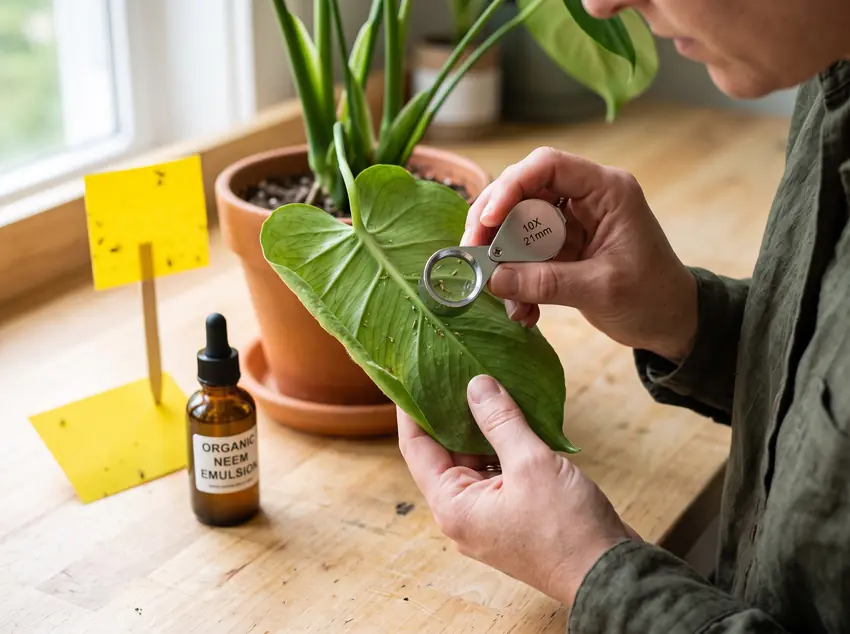
Before bringing a new purchase inside your main living areas, run through this inspection checklist with a 10x jeweler’s loupe or flashlight:
| Plant Zone | Primary Threat to Look For | Telltale Warning Signs |
|---|---|---|
| Leaf Undersides & Veins | Spider mites, thrips, scale | Fine silk, silver stippling, black frass specks, amber bumps |
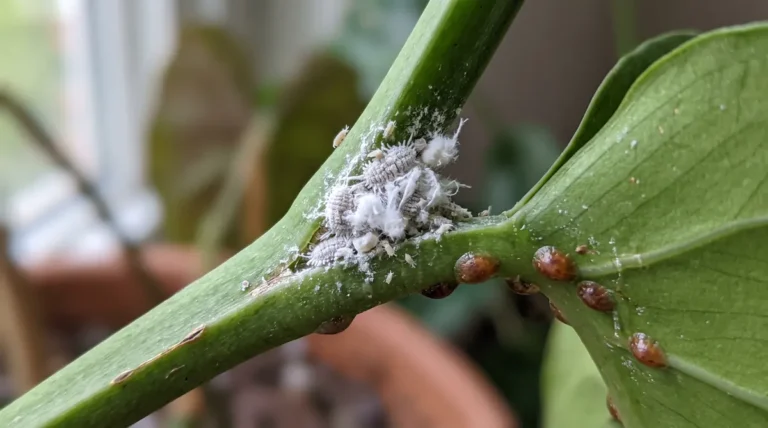
| Petiole Sheaths & Axils | Mealybugs (*Pseudococcus*) | White cotton-like fuzz, sticky droplets of honeydew |
| Unfurling New Leaf Tips | Thrips nymphs, aphids | Deformed or blackened new leaf margins, curling edges |
| Substrate & Pot Rim | Fungus gnats, root mealybugs, snails | Flying gnats on soil disturbance, white chalk on roots |
The 5-Step New Plant Intake Protocol
Follow this exact sequence whenever a new plant arrives at your doorstep or returns from an indoor plant swap:
Step 1: Outdoor / Entryway Triage
Unbox or unbag the plant in an entryway, garage, or porch. Do not walk directly into your main plant area. Inspect the foliage, stems, and soil surface under strong direct light. Wipe off loose nursery debris.
Step 2: The Decontamination Shower
Take the plant straight to your shower. Wrap the nursery pot in a plastic bag to avoid washing out the soil. Spray all top and bottom leaf surfaces with lukewarm water at moderate pressure. This washes away unanchored pioneer mites, aphids, and dust.
Step 3: Preventative Foliar & Substrate Treatment
Once the foliage is dry, apply a preventative spray of insecticidal soap with pure horticultural mineral oil or cold-pressed neem emulsion. If the nursery soil feels dense, compacted, or smells stagnant, repot into an airy, pasteurized mix such as our Chunky Aroid Soil Mix to eliminate subterranean root pests.
Step 4: Isolation in the Quarantine Zone (21–30 Days)
Place the new plant in a completely separate room or at least 10 feet away from any other houseplant with no direct shared airflow or fans. Keep a dedicated watering vessel and pruning snips for this quarantine area so you do not cross-contaminate tools.
Step 5: Yellow Sticky Trap Monitoring & Graduation
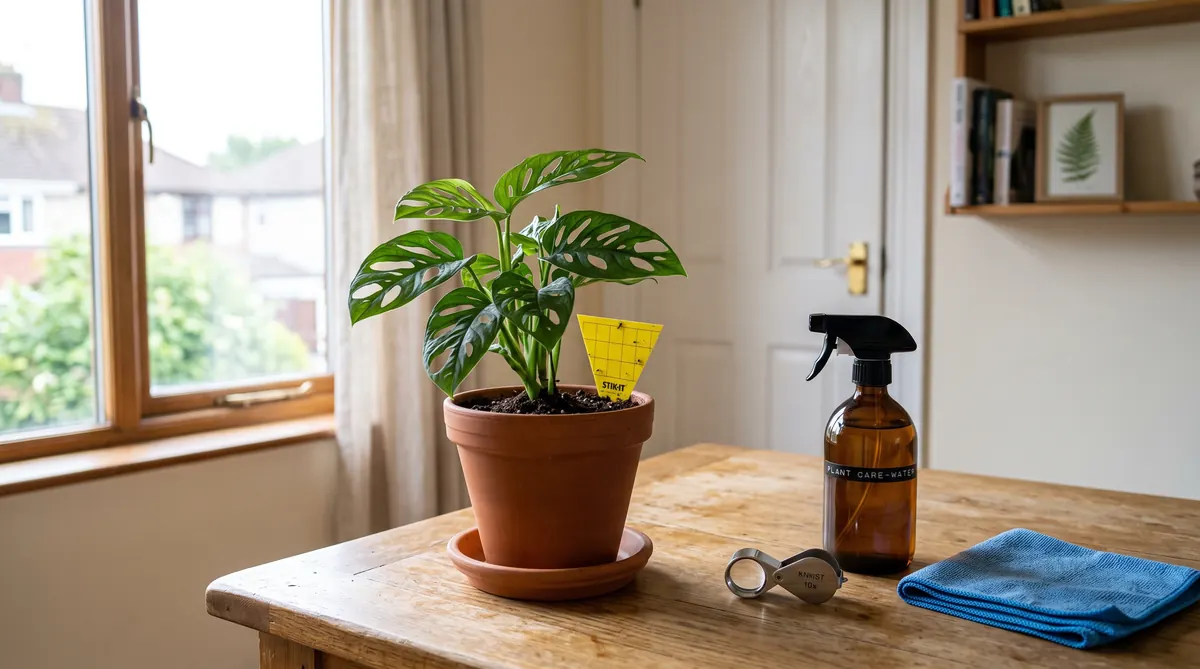
Insert a small yellow sticky card into the soil right next to the stem. Check the card and leaf undersides weekly. If after 21 to 30 days the trap is completely clean, new leaves have unfurled with zero deformities, and no webbing or stippling appears, your plant has passed quarantine and can join the main collection!
Troubleshooting Quarantine Logistics
• I Live in a Small Apartment with Only One Window
If you cannot place plants in separate rooms, use physical containment. A clear plastic storage bin with ventilation holes or a sealed pop-up mesh butterfly habitat with an inexpensive LED grow light bulb creates an impenetrable physical quarantine barrier in small spaces.
• Should I Automatically Use Systemic Insecticides on Every New Plant?
For high-risk plants like Alocasias and Monsteras that are prone to thrips and scale, adding systemic granules during initial potting is excellent insurance. However, if you plan to introduce beneficial predatory insects later, avoid synthetic systemics as they will persist in plant tissues for months.
• I Discovered Pests During Day 14 of Quarantine
Reset the quarantine clock! Treat the plant with targeted controls (such as alcohol spot treatments or miticides) and start a fresh 21-day observation period from the day of the last visible pest sighting.