The Science of Watering Tropical Plants: How to Never Overwater Again
Why “overwatering” has nothing to do with water volume, how root osmosis works, and the simple pot-lift method that eliminates all guesswork.
The Biggest Misunderstanding in Houseplant Care
Ask ten beginner plant parents why their houseplant died, and nine of them will say: “I gave it too much water.” Early in my plant journey, I fell into the exact same trap. I believed that pouring a large cup of water into a pot was dangerous, so I started giving my plants tiny, nervous little sips every two or three days.
The result? The bottom of the pots dried into bone-hard hydrophobic cakes, the surface roots stayed constantly damp, and my plants slowly died from a combination of underwatered roots and root rot. Once I looked into the physics of how plant roots actually take up water and oxygen, I realized that almost everything people are taught about watering is backward. Here is how water truly behaves in container soils and how to get it right every single time.
The Science: Root Osmosis and the Oxygen Piston Effect
1. Overwatering is About Frequency and Air, Not Volume
In a single tropical thunderstorm in the Costa Rican rainforest, a wild Monstera might receive ten gallons of water in twenty minutes. Yet it never gets root rot. Why? Because the water runs straight off the coarse bark into the ground, pulling fresh oxygen down behind it.
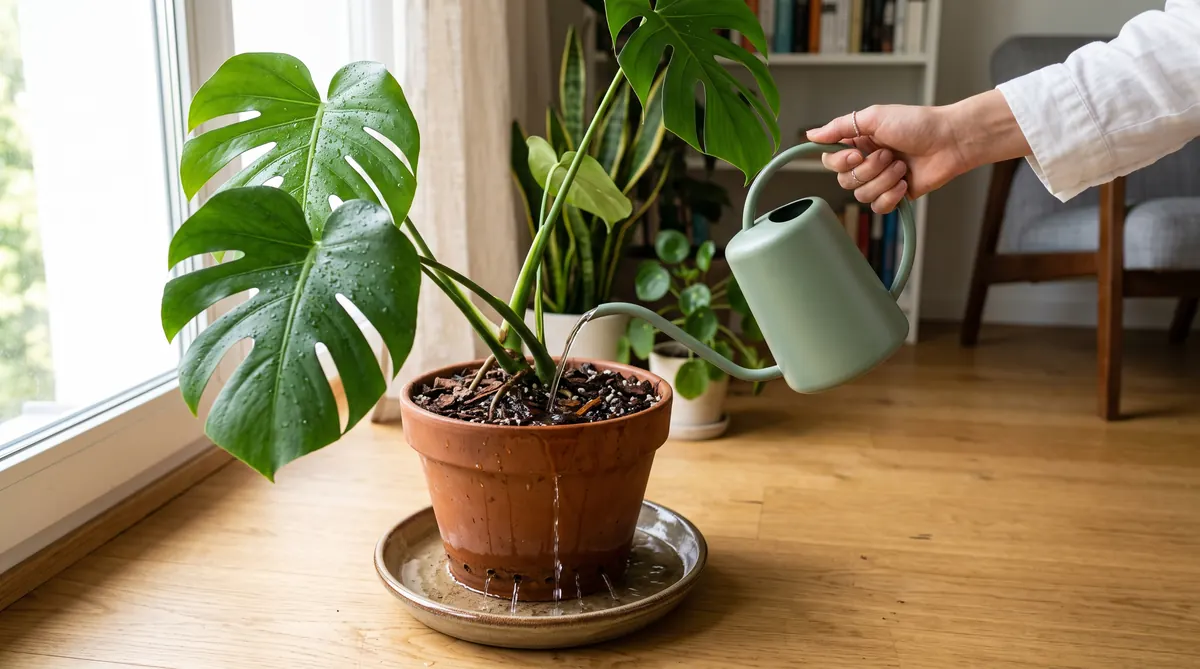
Plant physiology research (Taiz & Zeiger, 2010; Kramer & Boyer, 1995) proves that overwatering is a function of time and oxygen deprivation, never volume. When you drench a pot thoroughly, the downward rush of water acts like a mechanical piston, pushing stale carbon dioxide out the bottom drainage holes and sucking fresh atmospheric oxygen into the microscopic soil gaps. Problems only start when soil stays saturated for days without drying, suffocating the root cells.
2. Root Osmosis and Salt Burn
Plant roots absorb water through osmosis. Water moves naturally from areas of low mineral concentration (the moist soil) across the semi-permeable cell membranes into areas of high mineral concentration (inside the root cells).
However, if you give your plants small sips of water, dissolved salts from tap water and fertilizers never flush out (Sonneveld & Voogt, 2009). The mineral concentration in the soil climbs until it equals or exceeds the concentration inside the roots. When this happens, osmosis reverses: the soil literally pulls moisture out of the root cells, causing “fertilizer burn” and crispy leaf tips.
3 Foolproof Ways to Know Exactly When to Water
1. The “Pot-Lift” Test (My Most Reliable Method)
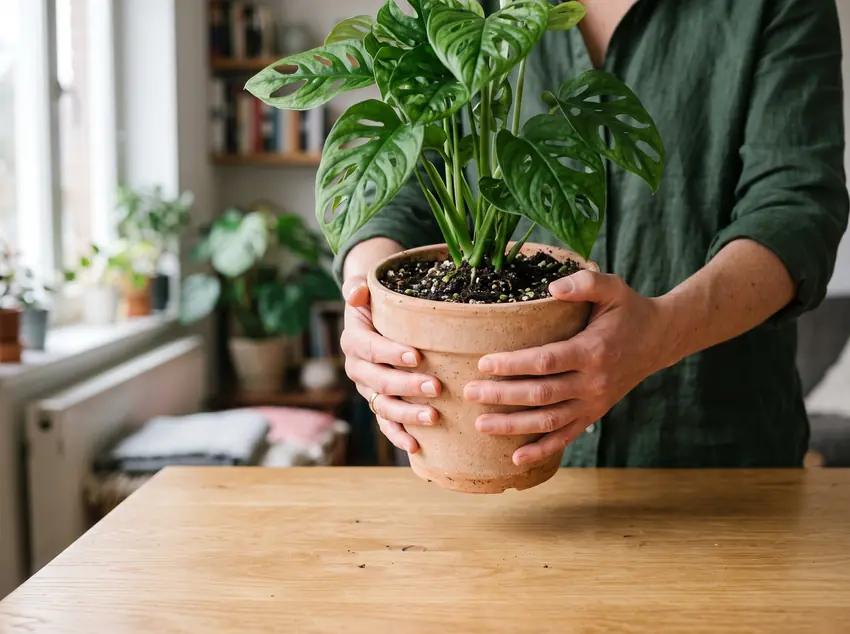
Water is heavy (one pint weighs over a pound). When a potted plant is fully drenched, it feels noticeably heavy in your hands. As the plant drinks and water evaporates, the pot becomes remarkably light. Pick up your pots right after watering to learn their “heavy” baseline, then lift them before watering. When the pot feels light and airy, it is time for a drink.
2. The Wooden Skewer Method
Cheap pronged moisture meters often give false readings in chunky aroid soil because air gaps around the metal probe register as “dry” even when the root ball is damp. Instead, take a simple wooden kitchen skewer and insert it deep into the root zone for twenty seconds. If it comes out clean and dry, water. If it comes out dark and damp with soil clinging to it, wait.
3. Using Free-Draining Chunky Soil as Your Safety Net
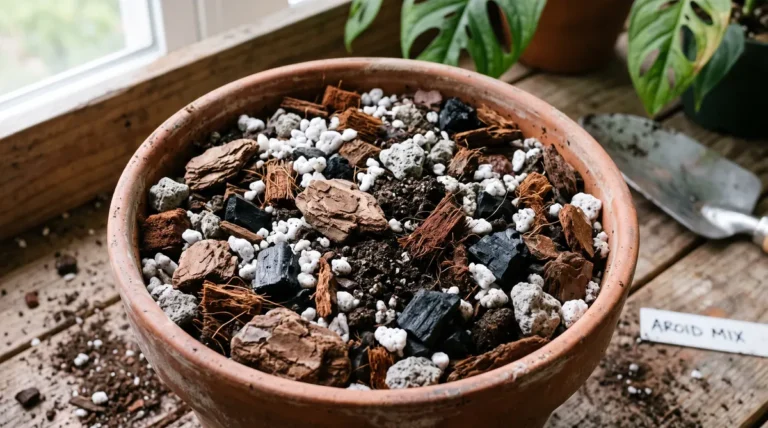
The easiest way to never worry about overwatering is using an airy, chunky substrate with large pieces of bark and perlite. A chunky mix allows excess water to escape instantly, making accidental root drowning nearly impossible. Check out my full formula in The Science of Chunky Aroid Soil: DIY Substrate Recipes for Epiphytic Root Health.
Tap Water Truths: Chlorine, Fluoride, and Flushing
You have probably heard the common advice: “Leave tap water on the counter overnight to let the chemicals evaporate.” Here is the reality: leaving water out will evaporate pure chlorine, but modern municipal water supplies use chloramine and fluoride, neither of which evaporates into the air.
Sensitive foliage plants, especially Calathea Orbifolia and Peace Lilies, suffer from fluoride toxicity (Poole & Conover, 1981), resulting in crispy black margins. If your tap water is very hard, use a zero-water filter, collect rainwater, or perform a deep soil flush every three months by running warm water through the pot for two minutes to leach out mineral accumulation.
Watering Needs by Plant Type
| Plant Category | Drying Threshold | Watering Method |
|---|---|---|
| Climbing Aroids (Monstera, Philodendron) | Let top 50% of soil dry out | Full top soak until draining; flush thoroughly |
| Understory Foliage (Calathea, Peace Lily) | Let top 10-20% dry; keep evenly damp | Filtered/rainwater soak; bottom watering works well |
| Drought-Adapted (ZZ Plant, Snake Plant) | Let 100% of soil dry bone-dry | Infrequent deep soak (every 3 to 6 weeks) |
Troubleshooting Common Watering Mistakes
• Water Runs Straight Through the Pot in Two Seconds
This means your peat or coir substrate has turned hydrophobic (water-repellent). Set the pot in a basin of lukewarm water for 30 minutes to allow the root ball to re-absorb moisture from the bottom up.
• Yellow Leaves with Soft, Translucent Stems
This indicates root rot from chronically waterlogged soil. Stop watering immediately, unpot the plant, inspect for brown mushy roots, and repot in fresh, well-aerated chunky mix.
• White Crust Forming on Soil Surface or Clay Pots
This crust is accumulated mineral salts from tap water and synthetic fertilizers. Scrape off the top layer of crust and flush the entire pot with plain distilled or filtered water.