Beneficial Insects for Indoor Tropical Plants: Natural Pest Control
How microscopic predators hunt down thrips, spider mites, and fungus gnats, why living biocontrols outperform chemical sprays, and how to safely release them inside your living room.

Overcoming the “Bugs in My House” Panic
The first time someone suggested I release thousands of live insects into my living room to protect my houseplants, I thought they had lost their mind. Like most people, my immediate instinct when seeing a pest was to spray it with chemical insecticides until nothing moved.
However, as my collection expanded past fifty tropicals, the spray-and-pray routine became unsustainable. Pests developed resistance, chemical fumes filled the apartment, and every time I eradicated one outbreak, a new one flared up three weeks later. The turning point came when I realized commercial greenhouses had solved this problem decades ago: they do not fight nature; they recruit it.
Releasing beneficial predatory organisms is the cleanest, most effective way to keep rare tropicals pristine. These microscopic allies do not bite people, do not harm pets, and will never leave your plant canopy because their entire world revolves around hunting the pests eating your leaves.
The Science: Predatory Lifestyles and Biological Balance
1. Phytoseiid Predatory Mite Lifestyles
Not all mites are villains. In ecological acarology, predatory mites belonging to the family Phytoseiidae are divided into distinct behavioral classes (McMurtry & Croft, 1997):
- Type I Specialists (*Phytoseiulus persimilis*): Fast-moving bright orange hunters that exclusively devour two-spotted spider mites. An individual adult consumes up to 20 pest eggs or 5 adult mites every single day. Once they clean out the infestation, they die off naturally without alternative food.
- Type II & III Generalists (*Neoseiulus californicus* & *Amblyseius swirskii*): Versatile patrol guards. They hunt spider mite nymphs, young thrips larvae, and broad mites. When pest numbers are low, they survive on pollen and fungal spores, providing continuous preventive protection.
2. Entomopathogenic Nematodes (*Steinernema feltiae*)
For pests that live or pupate in the potting soil (such as fungus gnat larvae and thrips prepupae), beneficial microscopic roundworms provide subterranean defense (Grewal et al., 2005). Steinernema feltiae nematodes actively navigate through soil moisture, enter pest larvae through natural body openings, and release symbiotic bacteria that kill the host within 48 hours.
Dense, clumping foliage plants like the Peace Lily create ideal, humid canopy microclimates where predatory mites thrive. We explored how vapor pressure deficit governs indoor moisture levels in Mastering Indoor Humidity: VPD and Plant Physics.
The Indoor Biocontrol Matchmaking Guide
Pair the right predator with your specific pest issue using this field reference:
| Pest Target | Top Beneficial Predator | Best Application Method | Ideal Environment |
|---|---|---|---|
| Heavy Spider Mites | *Phytoseiulus persimilis* | Loose carrier flakes sprinkled on foliage | 68°–80°F (20°–27°C), 60%+ RH |
| Preventative Mites & Thrips | *Neoseiulus californicus* / *A. swirskii* | Slow-release hanging sachets | 65°–85°F (18°–29°C), 50%+ RH |
| Fungus Gnat & Thrips Pupae | *Steinernema feltiae* (Nematodes) | Soil drench with watering can | Moist potting mix, 55°–75°F (13°–24°C) |
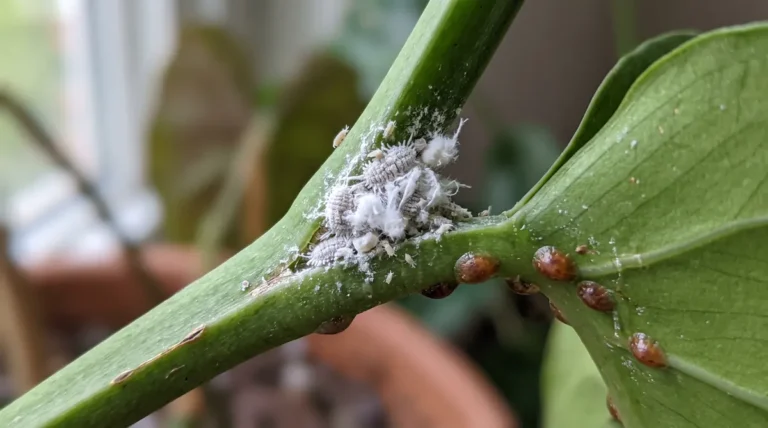
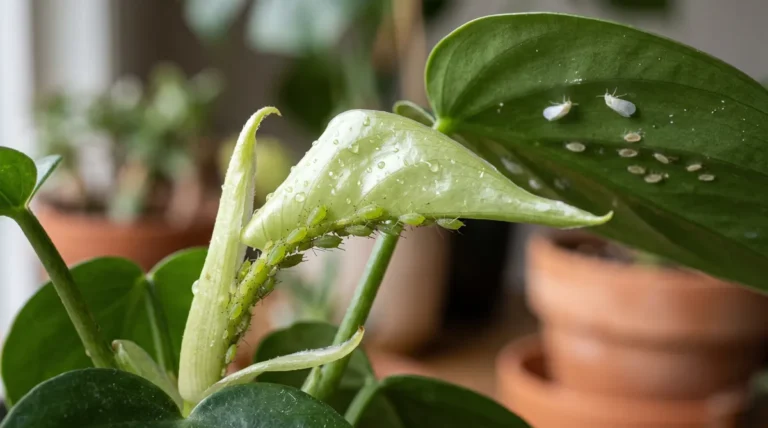
| Mealybugs & Aphids | *Chrysoperla carnea* (Green Lacewing) | Larval cards or sprinkle shaker tubes | 65°–80°F (18°–27°C), moderate light |

The 4-Step Beneficial Release Protocol
Follow these steps to ensure high predator survival and immediate hunting activity:
Step 1: The Chemical Washout Period
Ensure your plants have not received chemical pesticides or oil sprays for at least two weeks. Rinse the foliage with pure lukewarm water 24 hours prior to release to remove surface dust and residue.
Step 2: Acclimate at Room Temperature
Beneficial insects arrive in insulated packaging with cold packs. Let the package sit unopened at room temperature for 30 to 45 minutes so the predators slowly warm up and become active. Do not place the container in direct sunlight or on a radiator.
Step 3: Evening Deployment (Foliar Placement)
Always release beneficials in the evening or when grow lights turn off. Predators are sensitive to high radiant heat and UV light when first exploring (Heinz et al., 2004).
For hanging sachets, simply hook the cardboard hanger around a sturdy petiole in the shaded interior of the canopy. For loose carrier bottles (vermiculite or bran), gently rotate the bottle horizontally to mix the mites evenly, then sprinkle small pinches onto horizontal leaf surfaces and petiole crotches.
Step 4: Soil Application for Nematodes
Empty the nematode powder into a pitcher of lukewarm, non-chlorinated water and stir thoroughly. Pour the suspension directly over the moist potting soil of all your plants. Keep the soil lightly damp for the next 7 days so the nematodes can freely swim through substrate pores.
Troubleshooting Indoor Biocontrols
• Will These Bugs Leave the Pots and Crawl on My Furniture?
No. Beneficial mites and nematodes are obligate predators bound to high-humidity plant microclimates and pest prey. They cannot survive on dry drywalls, carpets, or human skin. If they wander off a plant, they desiccate and perish within hours.
• Should I Remove Yellow Sticky Traps Before Releasing Predators?
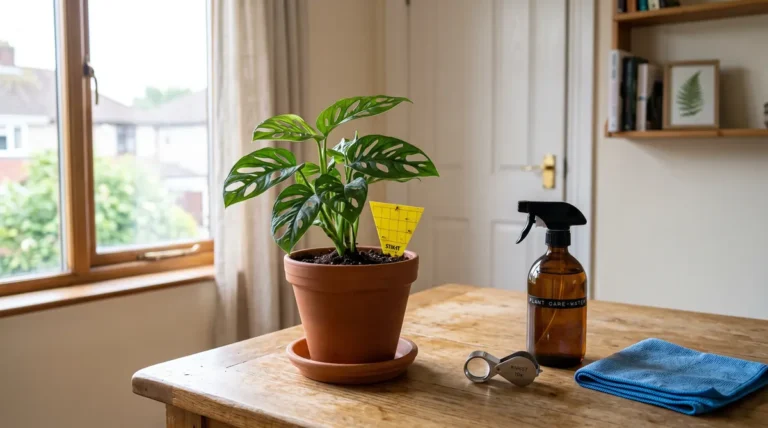
Yes! Remove or temporarily cover sticky traps for the first 10 days after releasing winged beneficials like green lacewings or predatory mites, as they will accidentally fly or wander onto the sticky glue.
• How Often Should I Reapply Beneficial Predators?
For active heavy outbreaks, a second release 14 days after the first guarantees complete eradication. For ongoing preventive maintenance in large collections, hanging fresh generalist sachets (*N. californicus*) every 6 to 8 weeks keeps plants permanently protected.