White Bird of Paradise Care Indoors: The Complete Guide
How to care for Strelitzia nicolai in your home, handle natural leaf splitting, and give this statement indoor giant the light it craves.
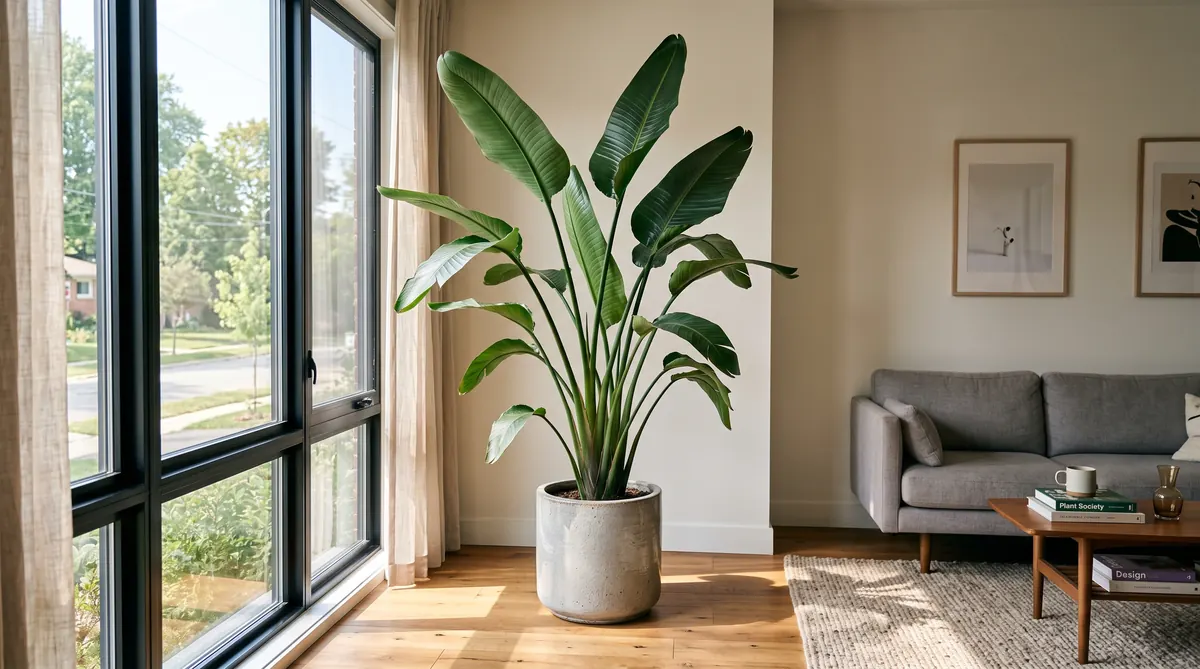
The Statement Plant of the Indoor Jungle
If you want a plant that transforms a plain room into an indoor greenhouse overnight, nothing beats a Strelitzia nicolai, commonly known as the Giant White Bird of Paradise. With its upright fan of banana-like leaves and architectural height, it brings instant drama to any living space.
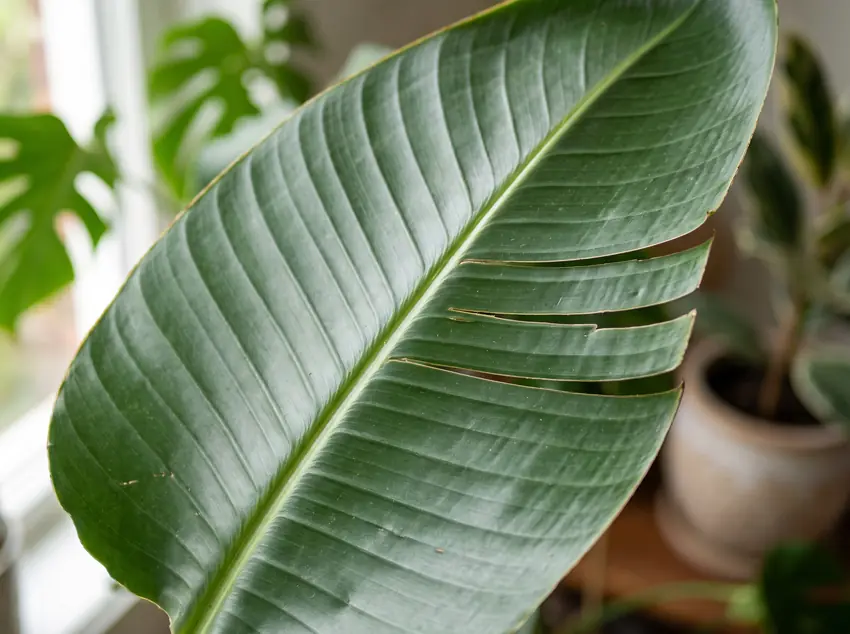
When I bought my first Strelitzia five years ago, I put it in the corner of my dining room. Within a month, I noticed tears forming across the wide leaf blades, and I panicked. I thought my cat had shredded the leaves or that my plant was dying from some strange disease. As I dug into the botanical research, I realized that leaf splits on a Bird of Paradise are not a defect at all. They are one of the smartest survival designs in the plant kingdom.
The Science: Why Do Bird of Paradise Leaves Split?
In the wild, Strelitzia nicolai grows along the windy coastal dune forests of eastern South Africa (Cron et al., 2012). These coastal regions face strong ocean gales and intense downpours. If the plant maintained wide, solid sail-like leaves, strong winds would catch the surface area and snap the tall stems right at the base.
Botanical studies on monocot leaf mechanics show that the veins running perpendicular to the central rib are designed to separate cleanly under air pressure without harming the vascular plumbing of the leaf. By splitting into aerodynamic ribbons, the leaf lets wind pass freely through while continuing to photosynthesize normally.
Everyday Home Care for a Thriving Bird of Paradise
1. Light: Give It Your Sunniest Spot
Unlike understory rainforest plants that prefer filtered shade, Strelitzia is a true sun worshipper. Indoors, lack of light is the number one reason these plants fail. In low light, the stems become weak and droop outward in search of the sun.
Place your Bird of Paradise right in front of your sunniest window. South or west-facing windows that receive at least four to six hours of direct sun daily will keep the plant compact, upright, and pushing out fresh new leaves all spring and summer.
2. Watering and Transpiration
Those massive leaves act like giant solar panels, transpiring a surprising amount of water on warm, sunny days. During the active growing season (spring through early autumn), your plant will drink heavily. Soak the pot thoroughly until water flows out the drainage holes, then let the top two to three inches of soil dry before watering again.
In the winter, plant metabolism slows down dramatically. Cut back on watering and always check soil moisture depth to prevent root rot. For a deeper look at how water moves through indoor potting mixes, check out my guide on The Science of Watering Tropical Houseplants: Osmosis, Mineral Toxicity, and Flushing.
3. Pot Size and Thick Taproots
Bird of Paradise plants grow thick, fleshy, tuber-like roots that store water. These roots are so strong that they can warp or crack plastic nursery pots as the plant matures. When repotting every two years, choose a heavy, wide pot with good drainage. Use a well-draining soil mix containing 60% quality potting soil, 25% perlite or pumice, and 15% coarse orchid bark.
4. Wiping Leaves and Watching for Spider Mites
Because the broad leaves collect dust quickly, wipe them down every few weeks with a damp cloth. Dust blocks sunlight from reaching the chlorophyll cells. Keeping leaves clean also lets you inspect the underside of the foliage for spider mites, which love dry indoor rooms and target Bird of Paradise leaves.
If you spot fine webbing or tiny yellow dots on the leaves, jump on it quickly with my proven treatment steps in Eradicating Spider Mites on Tropical Plants: Life Cycles, Humidity Barriers, and Miticides.
Quick Care Cheat Sheet
| Care Factor | What Works Best | What to Watch Out For |
|---|---|---|
| Light | Direct sun to very bright indirect light (South/West window) | Dim light causes weak, sprawling, floppy stems |
| Watering | Deep watering when top 2-3 inches feel dry | Winter overwatering leads to soggy root tubers |
| Temperature | 65°F to 85°F (18°C to 29°C) | Protect from freezing window drafts below 55°F (13°C) |
| Humidity | Moderate to high (45% to 65% RH) | Dry air causes unfurling leaves to stick or tear unevenly |
| Feeding | Balanced liquid feed every 2-3 weeks in spring/summer | Stop feeding in winter during low light periods |
Troubleshooting Common Bird of Paradise Problems
• Leaves Curling Inward Along the Edges
Inward curling is a defense mechanism against moisture loss. It usually means the plant is thirsty, or the air in your room is very dry. Check soil moisture and give the plant a thorough drink if the top few inches are dry.
• New Leaf Stuck While Unfurling
When indoor air drops below 40% humidity, new leaves can stick together as they roll out. Do not force the leaf open with your hands, as this will tear it. Instead, wrap a warm, damp microfiber towel around the stuck leaf for twenty minutes to soften the natural plant sap and allow it to open freely.
• Floppy Stems Leaning Sideways
This almost always indicates insufficient sunlight. Move the plant closer to your brightest window and rotate the pot a quarter turn each week so growth stays balanced and straight.