Yellow Mushrooms in Houseplants: Are They Dangerous To Soil?
Discover why neon yellow mushrooms and white surface fuzz appear in potting soil, how saprophytes interact with living root systems, and how to safely manage fungal blooms indoors.
The Morning Neon Surprise
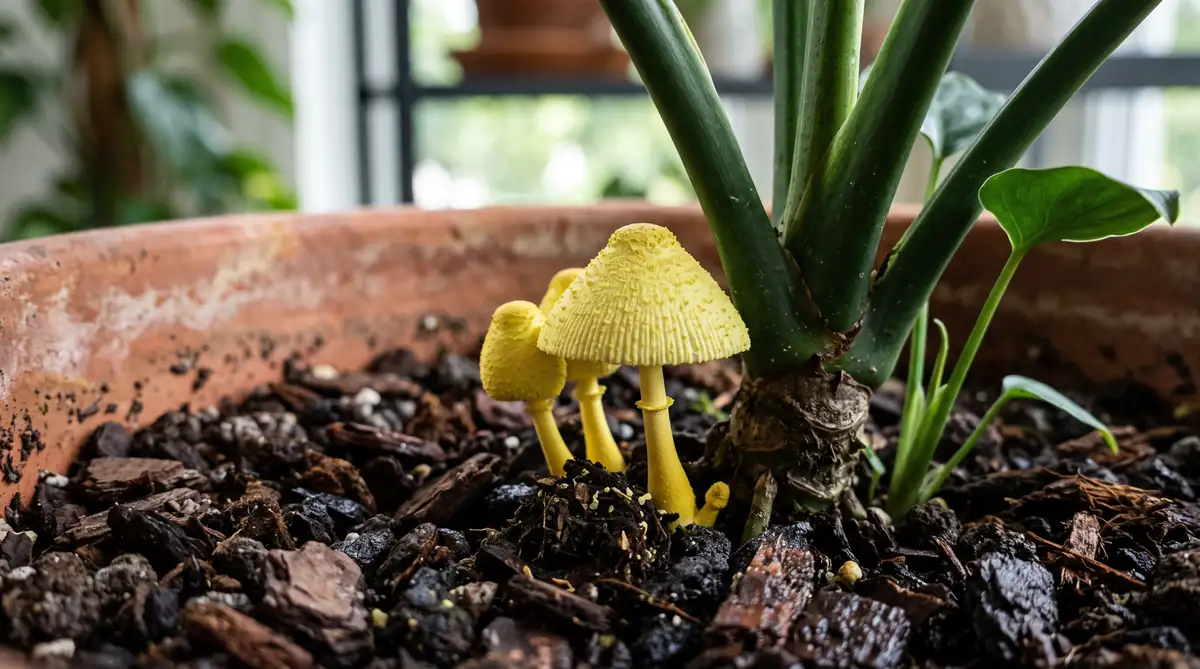
A few years ago, I walked into my living room to water my favorite Monstera deliciosa. Right at the base of the main stem, a cluster of vibrant, neon-yellow parasol mushrooms had sprouted overnight. The soil around them was covered in tiny, mustard-yellow spheres resembling miniature insect eggs.
My first reaction was pure alarm. I assumed my soil had contracted a dangerous blight or that some tropical pest had laid hundreds of eggs around my plant roots. I immediately began researching how to sterilize the soil with bleach or repot the entire specimen.
Fortunately, a deeper look into soil mycology stopped me. Those bright yellow mushrooms were fruiting bodies of Leucocoprinus birnbaumii, a harmless saprophytic fungus that breaks down complex organic matter in commercial potting mixes. Once you understand the biology of soil fungi, you realize that mushrooms and surface molds indicate active organic matter decomposition and elevated moisture retention.
The Science: Leucocoprinus birnbaumii, Sclerotia, and Saprophytic Ecology
1. The Biology of the Plantpot Dapperling
Leucocoprinus birnbaumii (commonly known as the plantpot dapperling or yellow houseplant mushroom) is a tropical and subtropical agaric fungus in the family Agaricaceae (Vellinga, 2001). Its microscopic spores are ubiquitous in commercial greenhouse potting components like peat moss, composted bark, and coconut coir.
The fungus is strictly saprophytic, meaning it derives its nutrition solely from decomposing dead plant material, cellulose, and lignin (Dix & Webster, 1995). It lacks the enzymatic mechanisms required to invade living plant tissue. Its mycelium lives in harmony with plant roots, releasing trace minerals and organic carbon back into the rhizosphere as it digests woody substrates.
2. Mystery Beads: Understanding Sclerotia
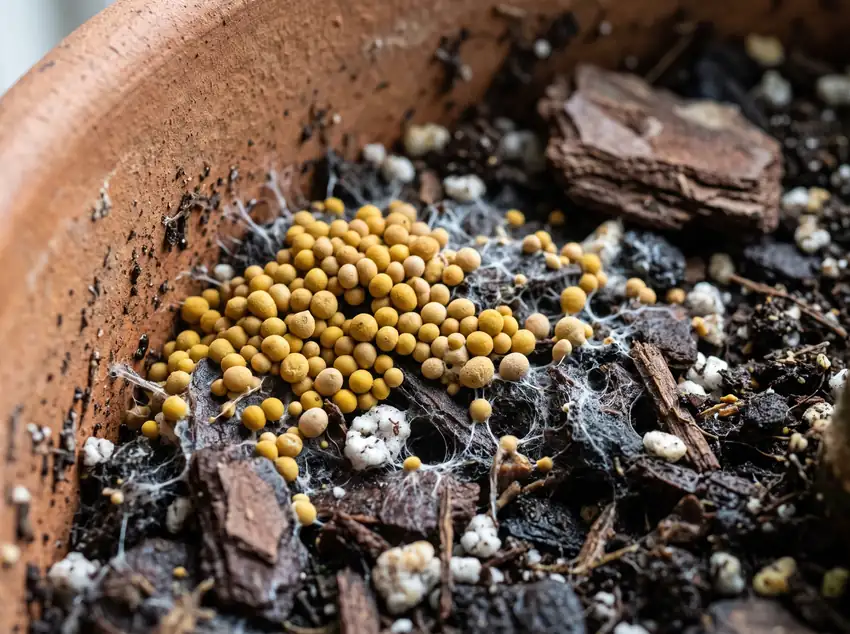
Growers frequently spot clusters of round, yellow-to-tan spheres (1 to 2 mm in diameter) clustered along the inner pot wall or soil surface. These structures are fungal resting bodies known as sclerotia (Mueller et al., 2007), which growers often confuse with insect eggs or slow-release fertilizer pellets.
Sclerotia are compact, nutrient-dense resting structures formed by the fungal mycelium to survive periods of drought or cold. When moisture, warmth, and humidity rise, these sclerotia activate and produce the visible yellow mushroom caps within 24 to 48 hours.
3. White Surface Mold vs. Pathogenic Root Rot
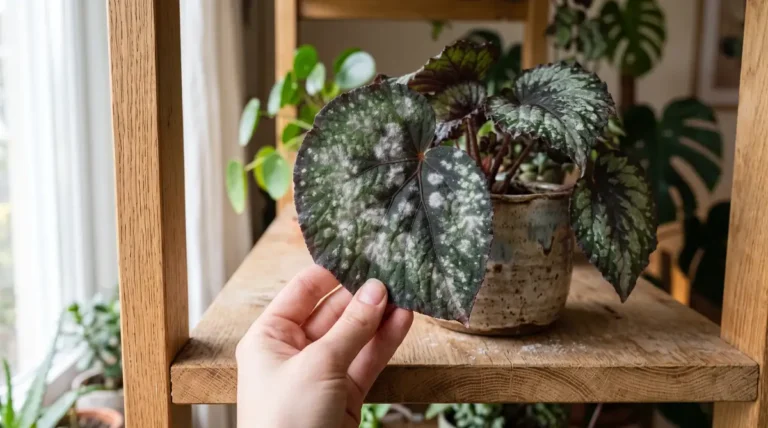
In addition to yellow mushrooms, many indoor gardeners encounter a fine white, powdery fuzz spreading across the top layer of soil. This white mold usually consists of beneficial or benign saprophytic fungi, such as Trichoderma species or harmless soil actinomycetes (Hoitink & Boehm, 1999).
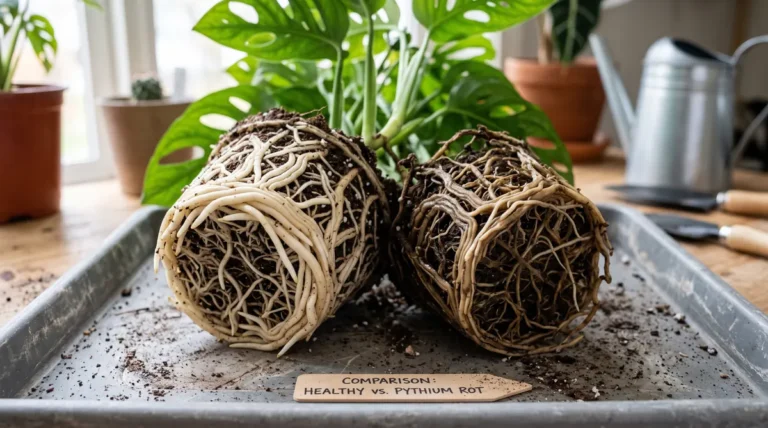
These surface saprophytes compete with aggressive pathogens for space and nutrients. Unlike pathogenic water molds such as Pythium and Phytophthora that rot roots in waterlogged subsoil, these surface saprophytes remain strictly confined to decomposing organic particles along the soil line.
4. Toxicity to Pets and Humans
While Leucocoprinus birnbaumii poses zero threat to plants, its fruiting bodies contain bioactive alkaloid pigments known as birnbaumins. These compounds are toxic if consumed by humans, cats, or dogs, causing severe gastric irritation, vomiting, and diarrhea. If you share your home with curious pets or young children, pluck the mushrooms immediately and discard them safely.
Houseplant Soil Fungi & Molds: Identification Guide
Use this reference table to evaluate fungal activity in your indoor planters:
| Fungal Organism | Visual Appearance | Danger to Plant | Recommended Action |
|---|---|---|---|
| Leucocoprinus birnbaumii | Bright yellow parasol caps, yellow bead-like sclerotia | Zero (Toxic to pets if eaten) | Pluck caps if pets are present; let soil dry out slightly |
| White Surface Saprophytes | White powdery or web-like fuzz across topsoil | Zero (Indicates damp air) | Scrape surface, improve airflow, dust with cinnamon |
| Mycorrhizal Inoculants | Fine white filament network integrated throughout root ball | Beneficial symbiosis | Leave undisturbed to assist phosphorus uptake |
| Pythium / Phytophthora | Black water-soaked root mush, foul odor, yellow leaves | Lethal pathogen | Prune rotten roots, treat with fungicide, repot into fresh mix |
4-Step Protocol to Control Soil Mold and Mushrooms
Step 1: Physical Removal of Caps and Sclerotia
Using a disposable spoon or gloved hands, gently lift out mature mushroom caps before they release millions of airborne spores into your living area. Scrape away dense clusters of yellow sclerotia from the upper soil layer.
Step 2: Apply Natural Cinnamaldehyde Antifungal
Ground culinary cinnamon contains high concentrations of cinnamaldehyde, a potent, natural antifungal compound (Ranasinghe et al., 2002; Shreaz et al., 2016). Lightly dust pure cinnamon powder over the topsoil surface. It inhibits fungal mycelial growth without harming delicate root structures or beneficial soil microbes.
Step 3: Aerate the Top Soil Layer
Take a clean wooden chopstick or fork and gently scrape the top 1 inch of potting mix. Breaking up the compacted crust exposes fungal filaments to circulating air, causing them to dehydrate and collapse.
Step 4: Increase Air Circulation and Adjust Watering Routine
Stagnant, humid microclimates around the pot rim accelerate mold formation and attract annoying soil pests. Constant dampness on topsoil also creates the perfect breeding ground for larvae, as detailed in our guide on Fungus Gnats in Tropical Soils. Set up a small oscillating fan on low speed near your plant shelf and switch to bottom watering so the top 2 inches of soil remain dry.
Troubleshooting Soil Mold Questions
• Do I Need to Completely Replace All Soil When Mushrooms Appear?
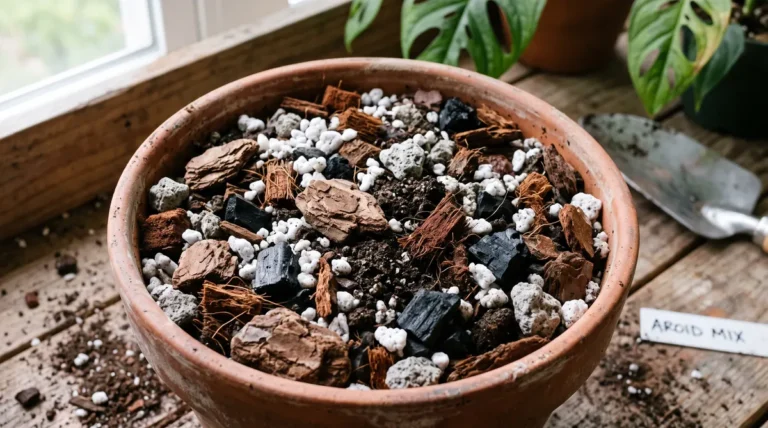
No. Complete substrate replacement inflicts unnecessary root shock. Because the fungus is saprophytic and beneficial to soil nutrient cycling, simple surface removal and drier watering intervals resolve the issue.
• Can I Use a Diluted Hydrogen Peroxide Drench?
Yes. For persistent white mold, mix 1 part standard 3% hydrogen peroxide with 4 parts room-temperature water and drench the soil. The solution fizzes on contact with fungal organic matter, converting into harmless oxygen and water while killing surface spores.
• Why Did Mushrooms Appear Suddenly After Months of Normal Care?
Fungal mycelium can remain dormant within dry peat or bark for over a year. A seasonal shift toward higher ambient humidity, coupled with a couple of heavy waterings, triggers instant fruit-body emergence from existing sclerotia.